


![image[11].png](https://static.wixstatic.com/media/210abd_118f72b6c43d449397c139ba0cd53252.png/v1/fill/w_250,h_227,al_c,q_95,enc_auto/210abd_118f72b6c43d449397c139ba0cd53252.png)
![image[4].png](https://static.wixstatic.com/media/210abd_ef9c57b9755e4a128384d7ba05e562ff.png/v1/fill/w_250,h_197,al_c,q_95,enc_auto/210abd_ef9c57b9755e4a128384d7ba05e562ff.png)
![image[5].png](https://static.wixstatic.com/media/210abd_25c175fe8886428b9f386432297321e1.png/v1/fill/w_250,h_193,al_c,q_95,enc_auto/210abd_25c175fe8886428b9f386432297321e1.png)


AFTER 40 CHART-TOPPING NO. 1s, DAVID MALLOY IS SAYING SOMETHING YOU SHOULD HEAR: “HATE IS NOT THE ANSWER”
The Nashville Songwriters Hall of Fame Inductee Calls for a Return to Peace, Love, and Harmony
The Hitmaker Behind “I Love a Rainy Night,” “Drivin’ My Life Away,” & “Real Love” — With Credits Spanning Dolly Parton, Kenny Rogers, Reba McEntire & Eddie Rabbitt
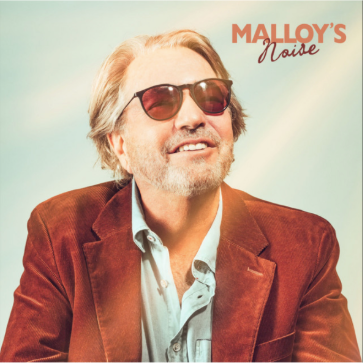
“Bring back those old hippie songs ’bout peace and love and harmony.” For David Malloy, that lyric is a call for a cultural reset. Hate, violence and division have become some of the loudest voices in our culture. With “Hate Is Not the Answer,” Malloy is challenging us to change the conversation and reconsider what we choose to amplify. At a time when the darkest stories are often given the biggest platform, his message is direct: hate cannot continue to be the loudest voice in the room.
“When someone is willing to trigger or detonate a bomb, their head and heart are already full of hate,” Malloy says. “I wrote this song because I am tired of that being the loudest story we tell.” His answer is rooted in something deliberately simple: peace, love, and harmony. Not as nostalgia, but as a message worth putting back at the center of the cultural conversation.
Malloy knows what it means for a song to reach millions of people. Across more than five decades as a songwriter and producer, the Nashville Songwriters Hall of Fame inductee has seen his songs reach No. 1 on the charts 40 times and generate more than 30 million radio plays, with a catalog that includes “I Love a Rainy Night,” “Drivin’ My Life Away,” “Suspicions,” “Love Will Turn You Around” and “Real Love.”
He has spent most of that career helping other artists find the right song, the right record and the right words. This time, the message is his: “Hate Is Not the Answer.”
Written entirely by Malloy and co-produced with Paul Childers, the new Americana/singer-songwriter track turns that message into a deceptively simple proposition: if hate has become the soundtrack to the cultural conversation, maybe it’s time to change what we’re playing. Malloy reaches back to a generation of music that wasn’t afraid to sing openly about peace, love and harmony—not to romanticize the past, but to ask whether its message might be exactly what the present needs.
The song begins where much of Malloy’s frustration began: with the news. Whether watching, reading or listening, the same themes kept confronting him—violence, anger and division. In the song, those observations give way to a direct refrain: hate is not the answer.
But Malloy believes the problem extends beyond what is happening in the world to how those stories reach us. “People reach for bad news more readily than good news. Social media rewards it,” he explains. “Algorithms chase views, likes, and listens, then feed us more of whatever keeps the numbers climbing. Hate travels farther than hope because the metrics say it does.”
After a career built on the belief that songs can reach people, Malloy is asking a deceptively simple question: “What if we glorified the positive instead of the negative?” “Hate Is Not the Answer” is his response. “I have always loved the peace-and-love generation and the music that actually sang about peace, love, and harmony,” Malloy says. “That spirit is still needed. Bring back those old hippie songs about peace and love and harmony.”
It is a sentiment that carries particular weight coming from a songwriter and producer whose work has traveled through American popular music for more than five decades. Malloy began writing songs at just 15 years old, growing up surrounded by music through his father, renowned engineer and producer Jim Malloy. His early musical world included figures such as Roy Orbison, Johnny Cash, Kris Kristofferson, Mickey Newbury and Cowboy Jack Clement, helping shape the instincts that would eventually lead him to a career behind some of country and pop music’s most enduring records.
One of the defining partnerships of that career began with Eddie Rabbitt. Malloy went on to co-write extensively with Rabbitt and Even Stevens, while producing records that helped shape Rabbitt’s crossover sound. His songwriting and production credits would ultimately extend across artists including Dolly Parton, Kenny Rogers, Reba McEntire, Rosanne Cash, Tim McGraw, Fleetwood Mac, Roy Orbison, Gregg Allman, and many more. Malloy also produced Mindy McCready’s debut album, Ten Thousand Angels, which achieved double-platinum certification, further cementing his influence across generations of country music.
In 2022, Malloy was inducted into the Nashville Songwriters Hall of Fame, recognizing a body of work that has seen his songs reach No. 1 on the charts 40 times and generate more than 30 million radio plays. But “Hate Is Not the Answer” isn’t about looking backward at those accomplishments. It is about what Malloy still believes a song can do now. At a moment when outrage can travel around the world in seconds, Malloy is deliberately choosing a different message, and asking listeners to consider what might happen if peace, love and harmony were given the same attention.
After more than five decades of writing songs people remember, Malloy is putting his own voice behind three ideas that once defined a generation and, he believes, still have something to say to this one: Peace. Love. Harmony. Hate is not the answer.
For more information on David Malloy, please visit:




Comments